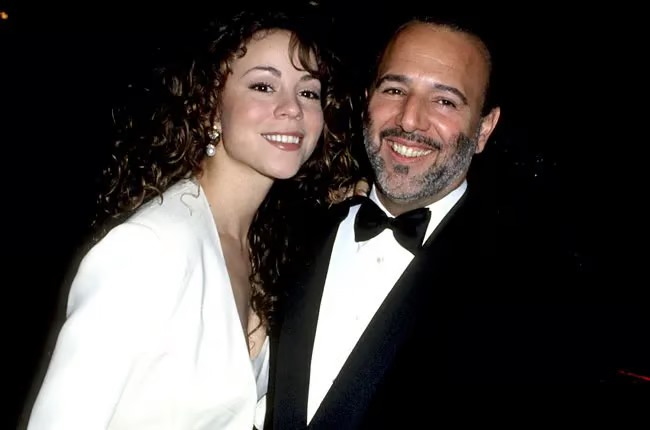
Mariah and Tommy moved quickly as her debut album neared completion. Part two follows the creation of “Love Takes Time,” her first major television appearances, two Grammy wins and the growing pressure behind her early success.
Mariah and Tommy complete the debut album
Narada Michael Walden had produced “Vision of Love,” while “Someday” looked like another strong single. However, Tommy Mottola still wanted a second major ballad for the album.
While reviewing Walden’s sessions, he noticed keyboard player Walter Afanasieff. Colleagues, including musicians connected to Whitney Houston, praised Walter’s talent. Mottola later offered him an exclusive production agreement.
Walter Afanasieff and “Love Takes Time”
Mottola asked Afanasieff to write with Carey under a tight deadline. Their creative chemistry worked immediately, and they completed “Love Takes Time” in only a few days.
The label rushed the finished ballad to the pressing plant. Meanwhile, a nine-city promotional tour had already introduced Carey’s voice to retailers and radio professionals. The performances earned enthusiastic reactions.
Mariah’s first national television appearances
Mottola secured Carey’s first major public appearance on The Arsenio Hall Show. She remained shy, but the performance introduced her to a national audience.
Her rendition of “America the Beautiful” at the NBA Finals created another breakthrough. Afterward, the arena announcer declared, “The Palace now has a Queen.” Her debut album soon sold millions.
The Grammys and four No. 1 singles
After his divorce became final, Mottola attended the Grammys with Carey. She won Best New Artist and Best Female Pop Vocal Performance for “Vision of Love.”
All four singles from her debut album reached No. 1 on the Billboard Hot 100. Sony then released “Emotions” quickly so listeners would connect with the new song before the second album arrived.
The strategy protected Carey from a possible sophomore slump. It also extended her historic run of consecutive chart-topping debut singles.
Building a long-term career
Mottola wanted Carey to create a strong catalog before slowing down. He believed that foundation could give her the freedom enjoyed by icons such as Barbra Streisand.
Carey understandably wanted time to celebrate. Studio perfectionism and constant promotion had created a demanding schedule. Still, Mottola feared that instant fame could overwhelm her without structure and support.
That conflict produced early cracks in their relationship. He viewed his guidance as protection, while others later described it as excessive control.
Family, responsibility and different perspectives
In his biography, Mottola rejects the idea that he forced Carey to work or sell records. He says he shared his industry knowledge and tried to provide stability, financial security and a welcoming family environment.
Carey had experienced racism and instability during childhood. According to Mottola, his parents welcomed her warmly, and she returned their affection. He nevertheless accepts responsibility for entering an inappropriate relationship with an artist whose career he supervised.
Mottola also regrets the pain that the relationship caused his two oldest children. Although he says Carey proposed marriage, he recognizes that each person remembers this period differently.
Continue to part three